Launch offer — valid today only

📄 Digital book in PDF · read it on your phone or print it

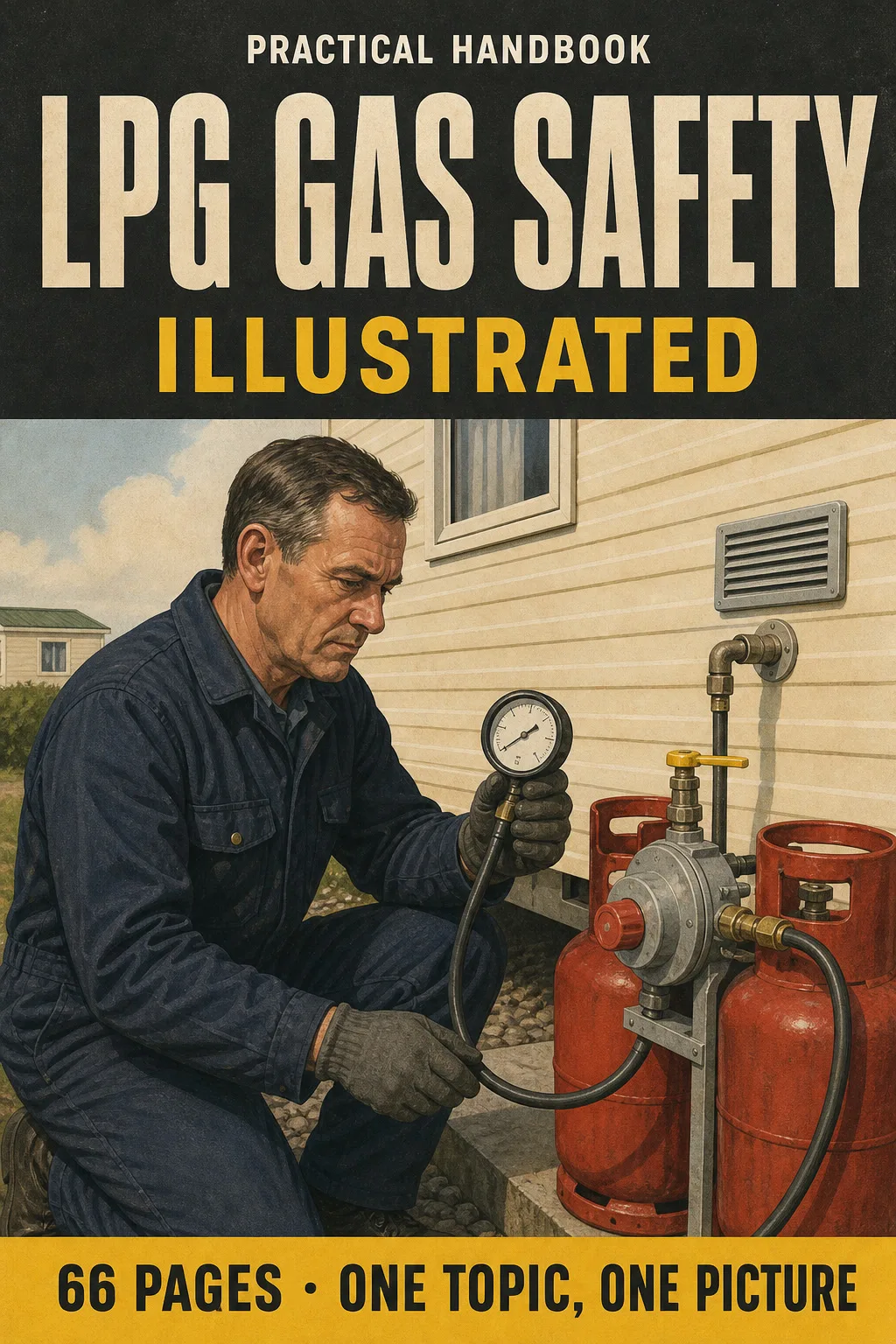
LPG Gas Safety Illustrated: the ACS LPG Modules in Drawings One Topic on Every Page

Propane and butane, cylinder siting, bulk tanks, regulators, pipework, tightness testing, ventilation, caravans and park homes. Every topic has its own page: the drawing first, then what you need to remember. 66 illustrated pages.

START REVISING THIS WAY

🔒 Secure checkout · PDF by email · 30-day guarantee

Every topic, its own pageEach rule and value drawn, with the explanation beside it
66 illustrated pages9 parts, from LPG versus natural gas to the final pre-assessment checklist
Up-to-date sourcesGSIUR 1998, BS 5482-1, BS EN 1949 and IGEM/UP/1B
PDF by emailFormat

Look Inside the Book

Every page has one large drawing and a box with the pressures, distances and steps you need to know:

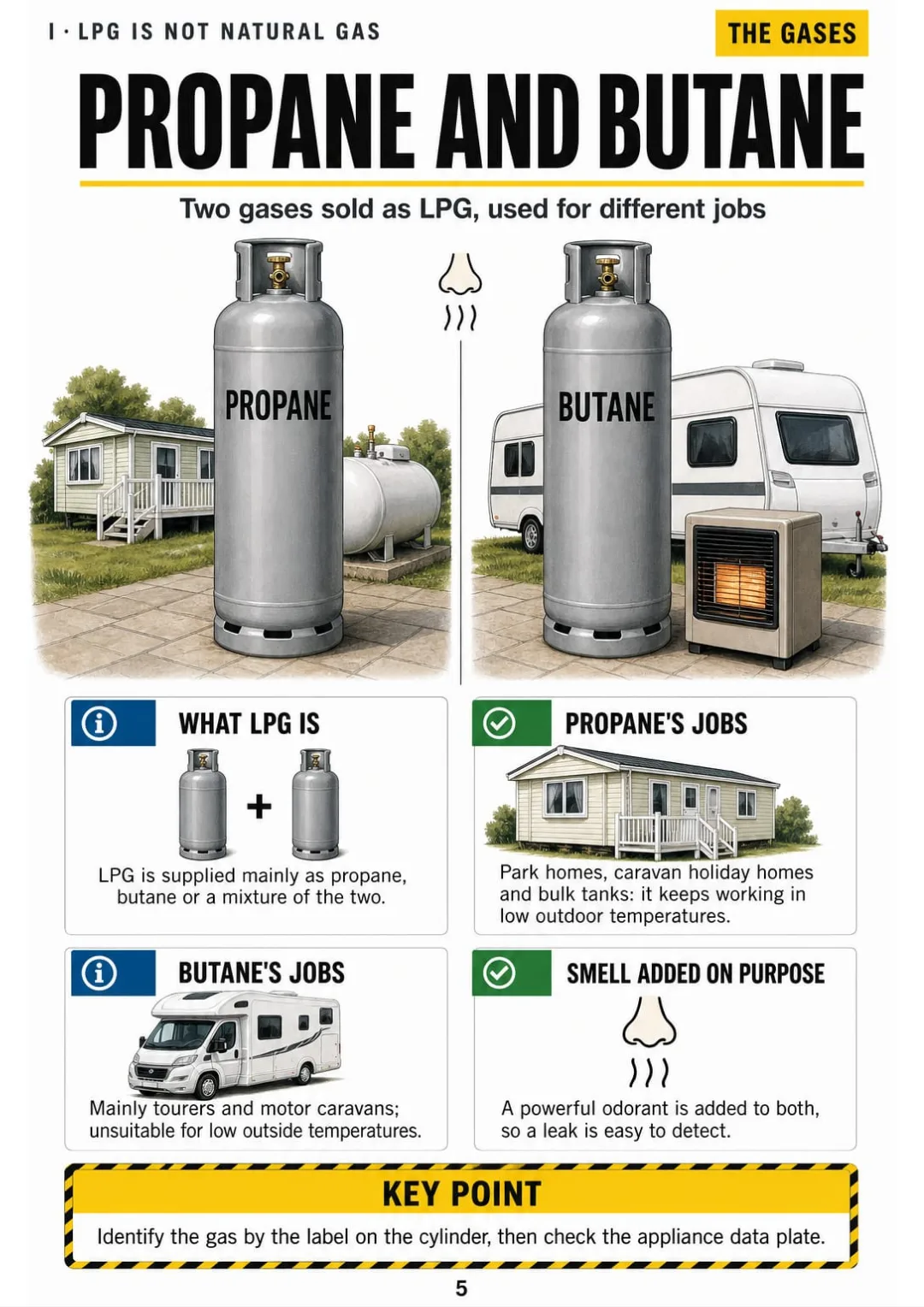
Propane for park homes, bulk and cold weather; butane for indoor portable heaters and summer touring.
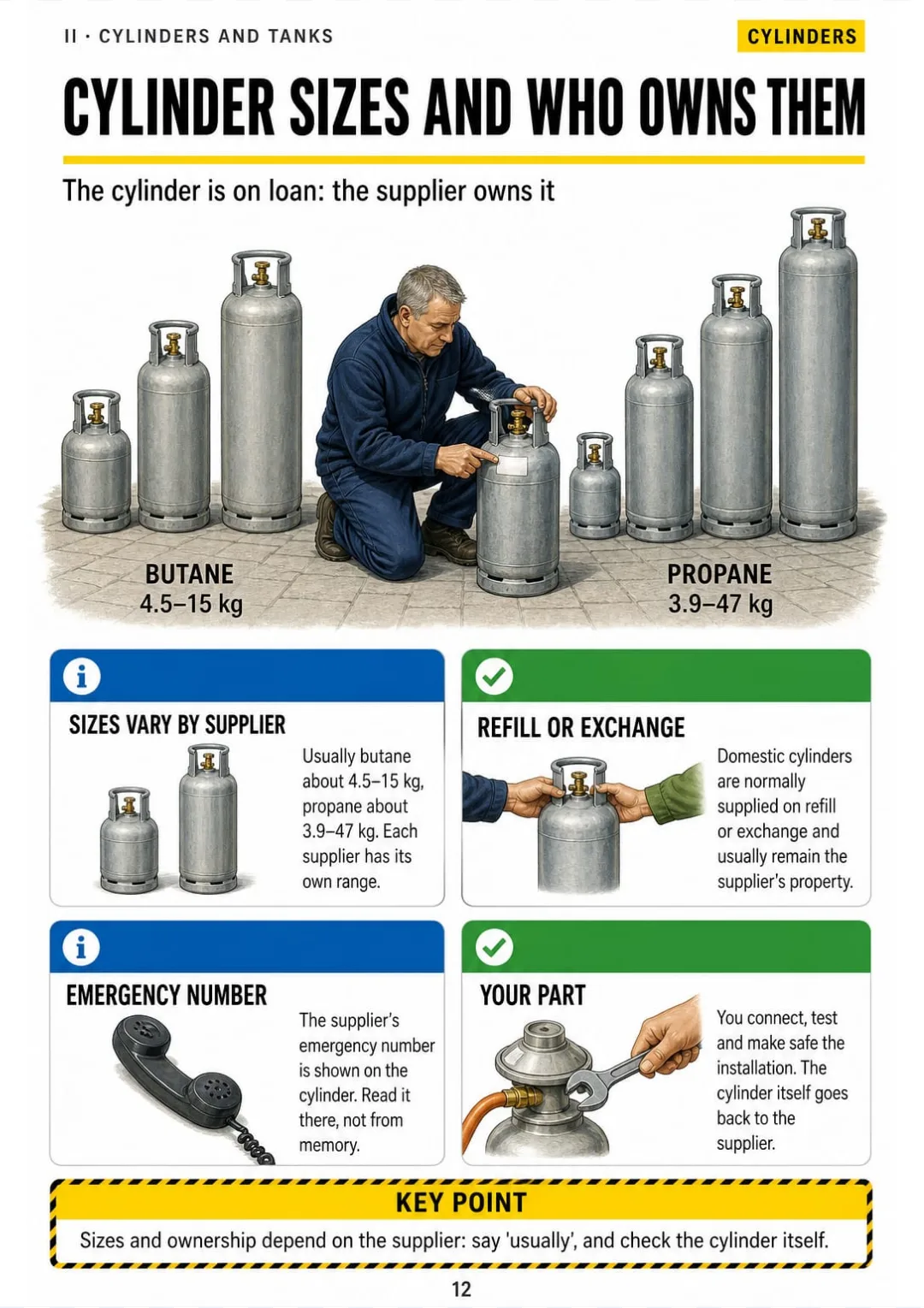
Butane about 4.5–15 kg, propane about 3.9–47 kg, and the emergency number is on the cylinder
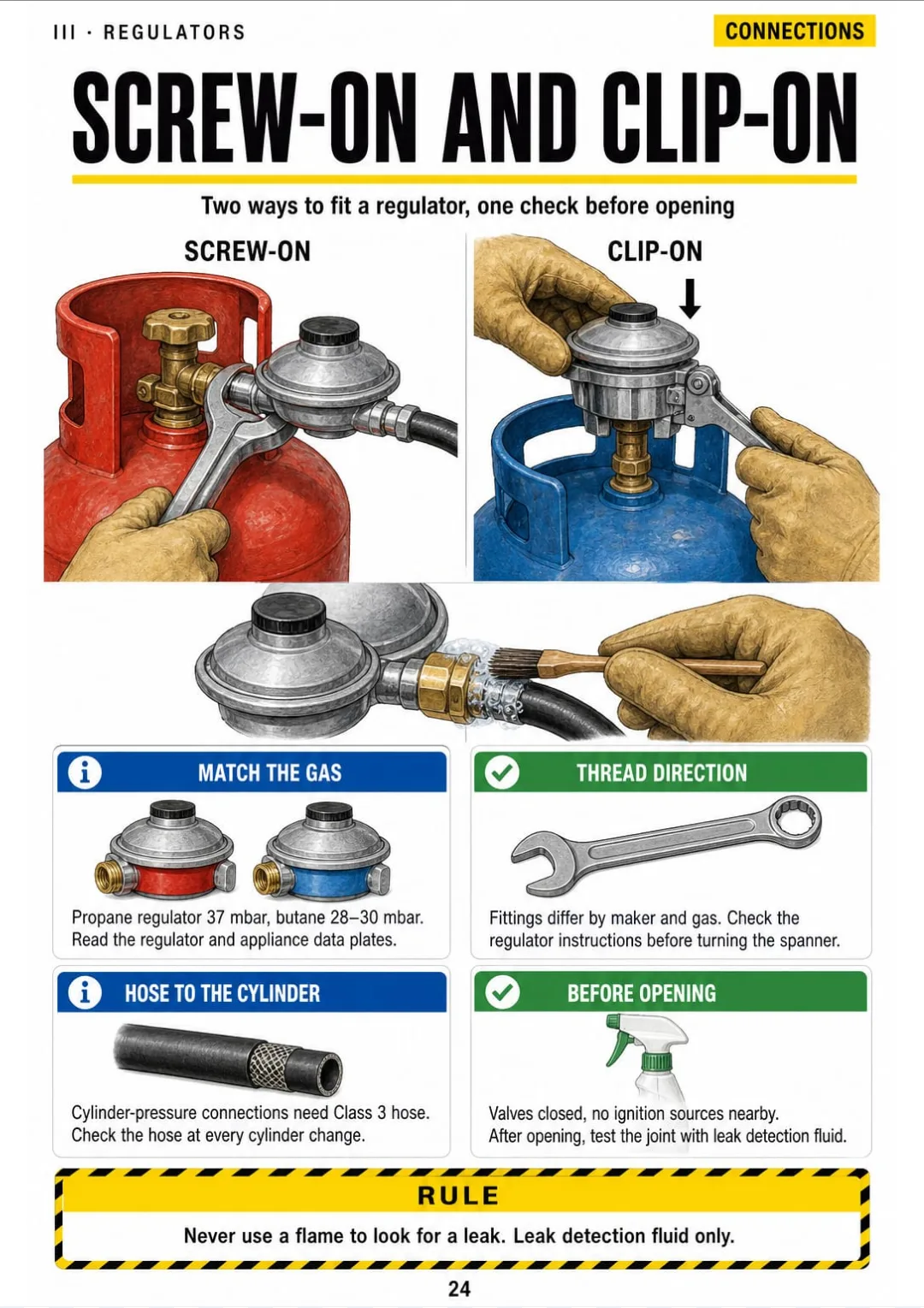
Right regulator for the gas, Class 3 hose at cylinder pressure, joint tested with fluid
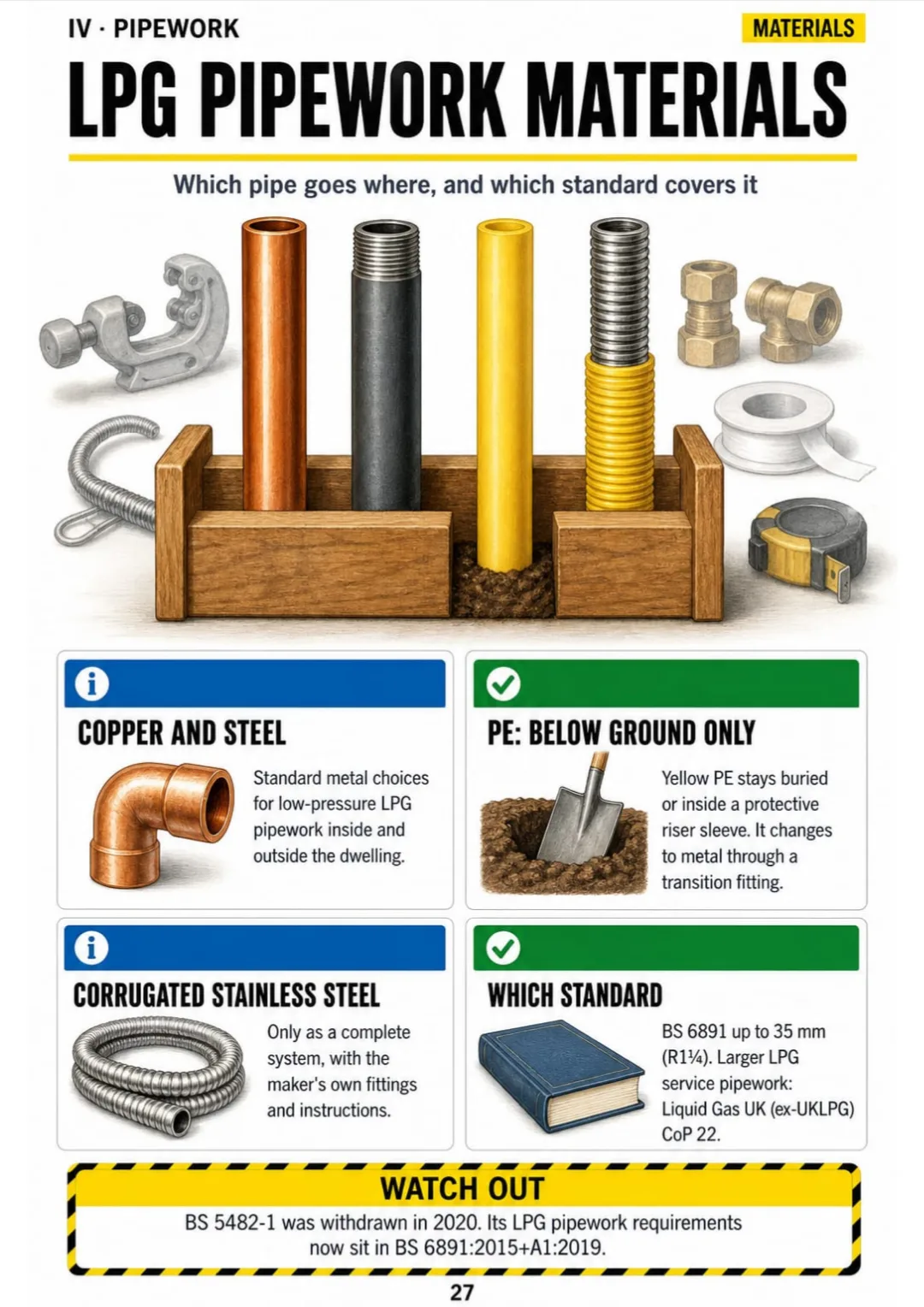
Copper, steel, buried PE and CSST: BS 6891 up to 35 mm, CoP 22 above it
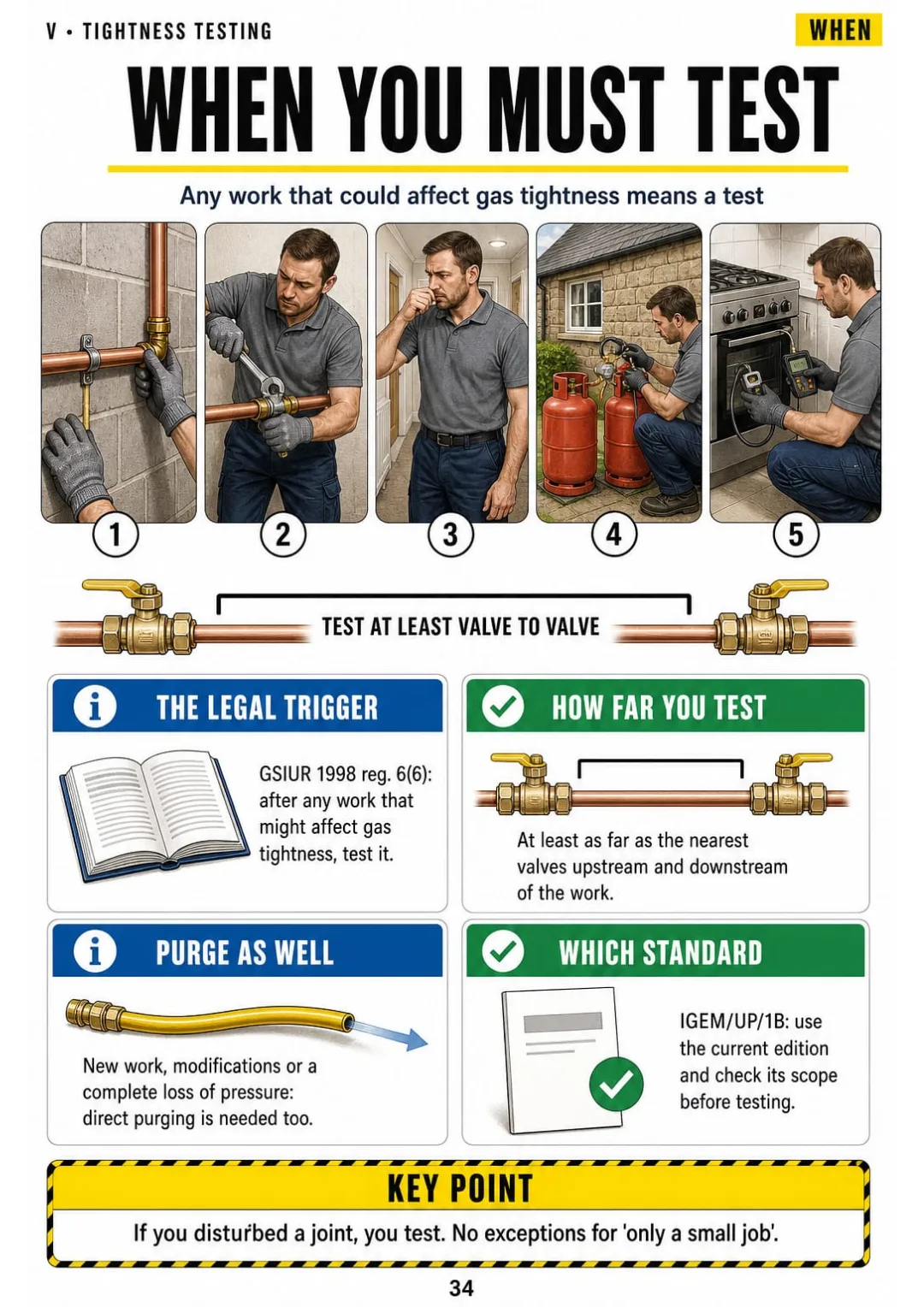
GSIUR reg. 6(6): test at least to the nearest valves upstream and downstream.
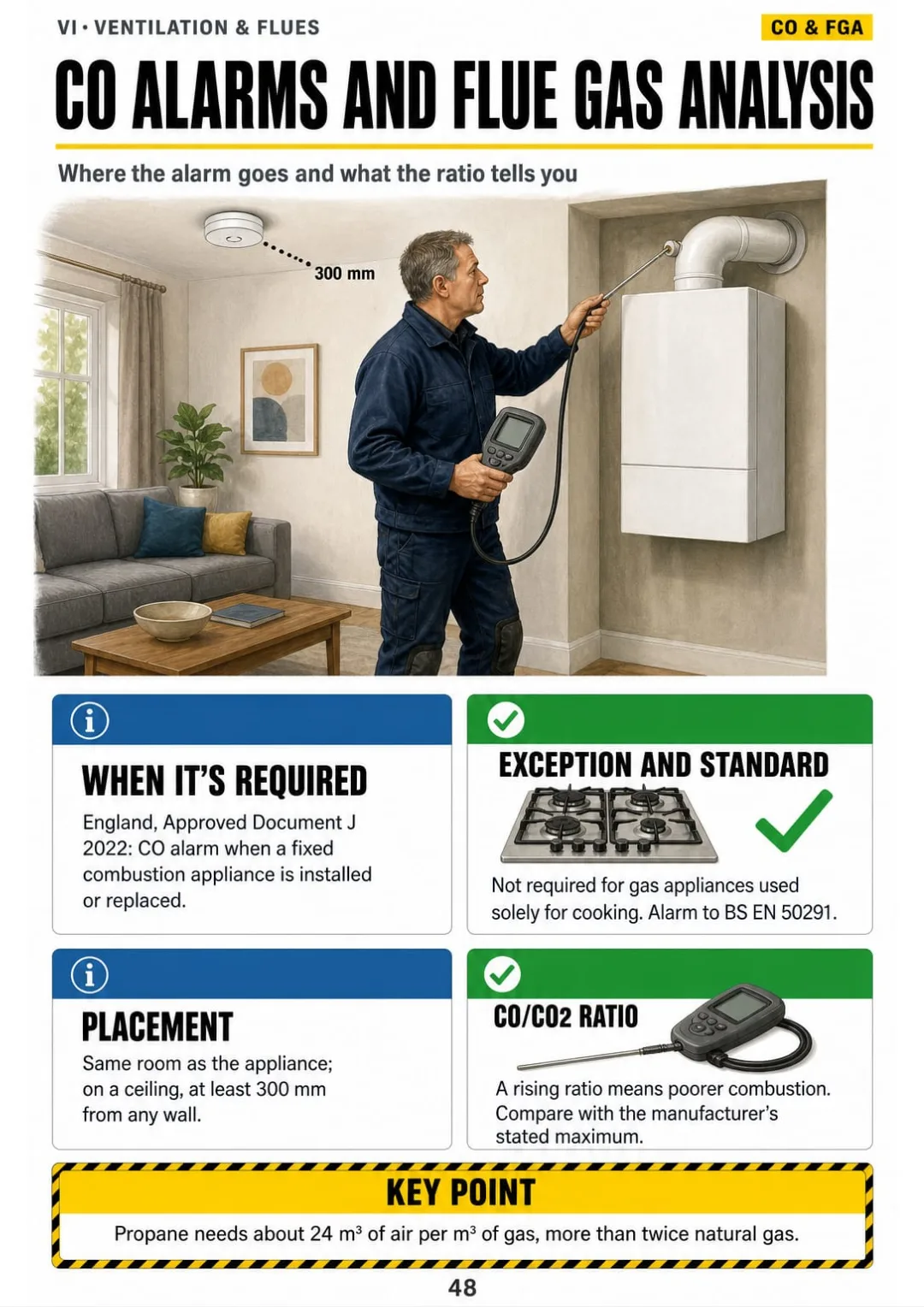
CO alarm to BS EN 50291 in the appliance room, ceiling-mounted at least 300 mm from walls (ADJ 2022)
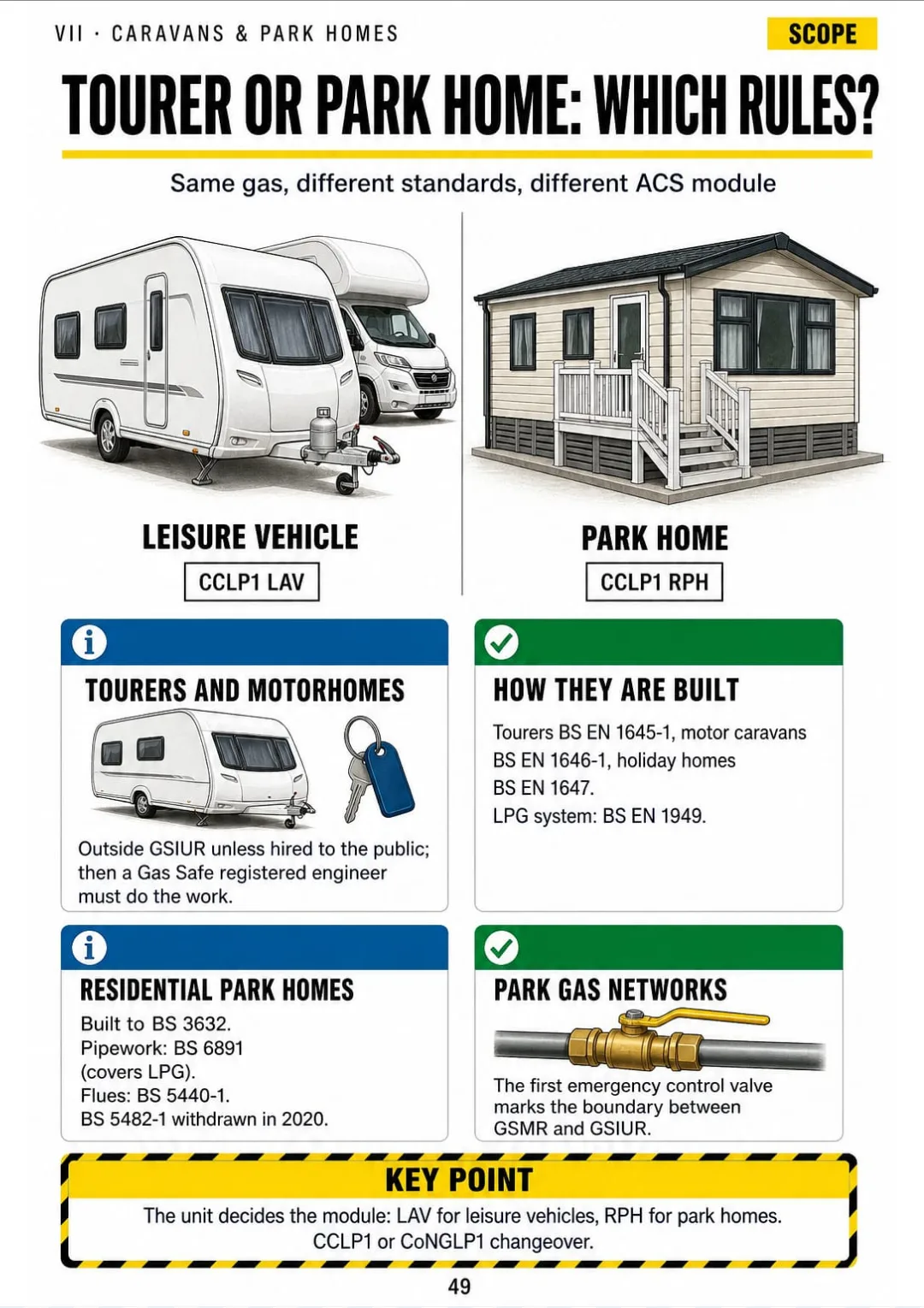
Tourers: BS EN 1949 and CCLP1 LAV · Park homes: BS 6891, BS 5440-1 and CCLP1 RPH
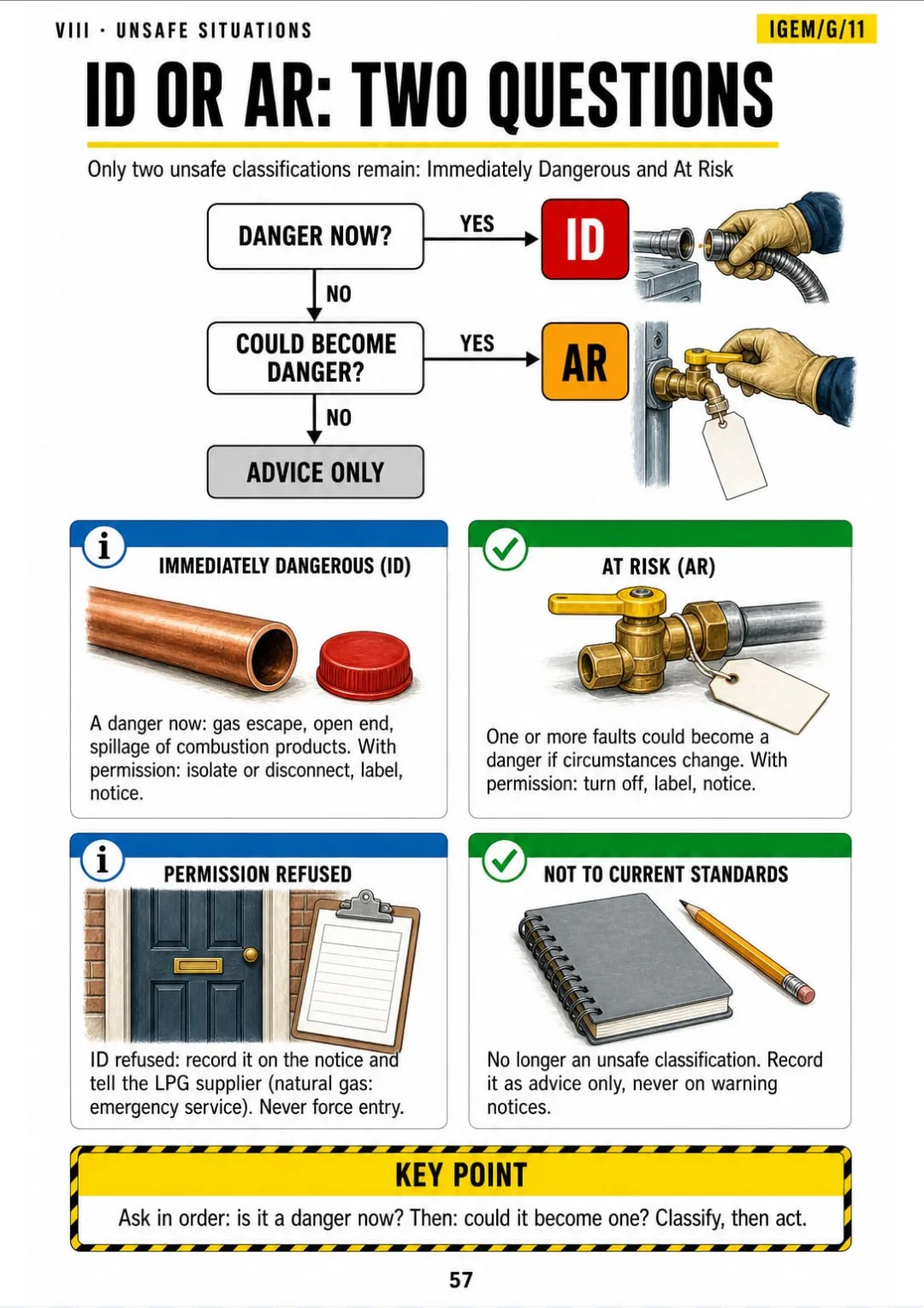
ID = danger now, disconnect · AR = could become danger, turn off · both labelled with a notice

Swipe to see more →

These are real pages from the book. The table of contents is the full one: 9 parts and 62 topics.

You Know Gas. LPG Was Just Scattered Across Separate Standards.

You're on a caravan site with the manometer on the test point. The regulator is marked 30 mbar, the old fire's badge says 37, and you have to decide which number is right.

The answer is in the guidance, but spread across paragraphs and separate standards: propane in one place, butane in another, caravans in a different document. Nothing puts the pressures side by side.

Right regulator for the gas, Class 3 hose at cylinder pressure, joint tested with fluid

In the book it's one page: the pressure ladder. Propane 37 mbar, butane 28–30, EN 1949 caravans 30, natural gas 20, each on its own rung, with the rule that settles it: the badge has to match the supply.

The same goes for cylinder siting, regulators and their safety cut-offs, the LPG tightness test, low-level vents and ID or AR: each one has its own page.

You read the gauge, you know where that number belongs and you carry on with the job without going back to the manual.

COMPARE FOR YOURSELF

The Same Topic, Two Ways to Study It

THIS
  • The manual: line after line
  • Propane, butane and caravan pressures in separate paragraphs
  • You go into the assessment with doubts
The nominal operating pressure for propane supplied to domestic appliances is 37 mbar, whilst butane appliances are generally designed to operate at 28 mbar, although values of up to 30 mbar may be encountered. Leisure accommodation vehicles manufactured in accordance with BS EN 1949 are fitted with a regulator delivering 30 mbar irrespective of the gas in use, whereas older vehicles may incorporate cylinder-mounted regulators at 28 or 37 mbar. The engineer should therefore establish the type of installation and confirm the appliance data badge before any regulator is replaced.
FOR THIS
  • The pressure ladder: every gas on one drawing
  • The weights and the emergency number in a box
  • You see it and you understand it
Butane about 4.5–15 kg, propane about 3.9–47 kg, and the emergency number is on the cylinder
CONTENTS

Take a Look at the 9 Parts and 62 Topics

LPG versus natural gas, cylinders and bulk tanks, regulators and pressures, pipework, tightness testing and purging, ventilation and appliances, caravans and park homes, unsafe situations and the run-up to the assessment: 66 pages, all illustrated.

ILPG is not natural gas · pp. 5-11
  1. Propane and butane: two gases, one name
  2. Heavier than air: where the gas goes
  3. Boiling point and the cold: why butane stops
  4. Liquid in the cylinder, gas in the pipe
  5. Calorific value: more energy per cubic metre
  6. Flammable limits and the smell
  7. The numbers that change from natural gas
IICylinders and bulk tanks · pp. 12-19
  1. Cylinder sizes and who owns them
  2. Siting cylinders outside a dwelling
  3. Where a cylinder must never go
  4. Cylinders indoors: the limited exceptions
  5. Manifolds and automatic changeover
  6. Bulk tanks: above ground and underground
  7. Bulk tank separation distances
  8. Storage of spare cylinders
IIIRegulators and pressures · pp. 20-26
  1. From tank pressure to appliance pressure
  2. Single-stage or two-stage regulation
  3. Inside a regulator
  4. OPSO and UPSO: the safety cut-offs
  5. Regulator connections: screw-on and clip-on
  6. Measuring standing and working pressure
  7. Low pressure at the appliance: the causes
IVPipework and connections · pp. 27-33
  1. Materials allowed for LPG pipework
  2. Sizing pipework for LPG
  3. Entry into the building
  4. Underground PE pipe and transition fittings
  5. Emergency control valve and isolation
  6. Flexible hoses: type, length, age
  7. Equipotential bonding and electrical separation
VTightness testing and purging · pp. 34-41
  1. When a tightness test is required
  2. The LPG test: the four steps in order
  3. Step 1: the let-by test
  4. Step 2 and 3: stabilisation and test
  5. Step 4: reading the result
  6. Finding the leak
  7. Purging LPG pipework safely
  8. Recording the test
VIVentilation, flues and appliances · pp. 42-48
  1. Appliance types: A, B and C
  2. Ventilation for LPG appliances
  3. Flueless LPG heaters and cabinet heaters
  4. Flues and terminals
  5. Converting an appliance to LPG
  6. Burner pressure and heat input check
  7. CO alarms and combustion analysis
VIICaravans, leisure vehicles and park homes · pp. 49-56
  1. Leisure vehicle or park home: which rules apply
  2. The cylinder locker
  3. Regulators in caravans: 30 mbar and the older systems
  4. Pipework in a leisure vehicle
  5. Low-level vents in caravans
  6. Tightness testing a leisure vehicle
  7. Park homes: supply, hoses and ventilation
  8. Boats: where this book stops
VIIIUnsafe situations and emergencies · pp. 57-61
  1. Immediately Dangerous or At Risk
  2. LPG examples of ID and AR
  3. Warning labels and notices
  4. Smell of gas on an LPG job
  5. Cylinder fire and overheating
IXBefore the assessment · pp. 62-66
  1. The ACS LPG modules explained
  2. The LPG values on one page
  3. The tightness test in one line
  4. The most frequent LPG mistakes from natural gas habits
  5. Final checklist: the job from start to finish

One Page, One Topic, All Clear

Think of it this way:

You've just added a run of copper to a propane supply, and you have to tightness test it before you turn the gas back on with the customer watching.

You open the book at the tightness test and see the four steps drawn in order: let-by, stabilisation, test, result, with what to check at each one.

GSIUR reg. 6(6): test at least to the nearest valves upstream and downstream.

The same with cylinder siting, the pressure ladder, low-level vents in caravans, appliance types and ID or AR: each one on its own page.

LPG Gas Safety Illustrated is 66 illustrated pages in 9 parts, one topic per page, and it ends with the LPG values on one page and a final job checklist.

What you see drawn, you don't have to memorize.

What's Inside LPG Gas Safety Illustrated:

Ipp. 5-11

LPG is not natural gas

Propane and butane, why LPG sits low, butane in the cold, liquid and vapour, calorific value, flammable limits and the numbers that change from natural gas.

IIpp. 12-19

Cylinders and bulk tanks

Cylinder sizes and ownership, siting outside, where a cylinder must never go, the indoor exceptions, manifolds, bulk tanks, separation distances and spare cylinders.

IIIpp. 20-26

Regulators and pressures

From tank pressure to appliance pressure, single- and two-stage regulation, inside a regulator, OPSO and UPSO, connections, standing and working pressure, low pressure causes.

IVpp. 27-33

Pipework and connections

Pipework materials, sizing for LPG, entry into the building, buried PE and transition fittings, the ECV, flexible hoses and bonding.

Vpp. 34-41

Tightness testing and purging

When a test is required, the four LPG steps in order, let-by, stabilisation and test, reading the result, finding the leak, purging and recording.

VIpp. 42-48

Ventilation, flues and appliances

Appliance types A, B and C, ventilation, flueless and cabinet heaters, flues and terminals, conversion to LPG, burner pressure, heat input, CO alarms and analysis.

VIIpp. 49-56

Caravans, leisure vehicles and park homes

Which rules apply, the cylinder locker, 30 mbar and older systems, pipework, low-level vents, testing a leisure vehicle, park homes, and where boats begin.

VIIIpp. 57-61

Unsafe situations and emergencies

Immediately Dangerous or At Risk, LPG examples of each, warning labels, a smell of gas on an LPG job, and cylinder fire and overheating.

IXpp. 62-66

Before the assessment

The ACS LPG modules explained, the LPG values on one page, the tightness test in one line, natural gas habits to drop and a final job checklist.

At the end of the book: The LPG values on one page, the tightness test in one line and a final job checklist.
Plus: 2 Free Books

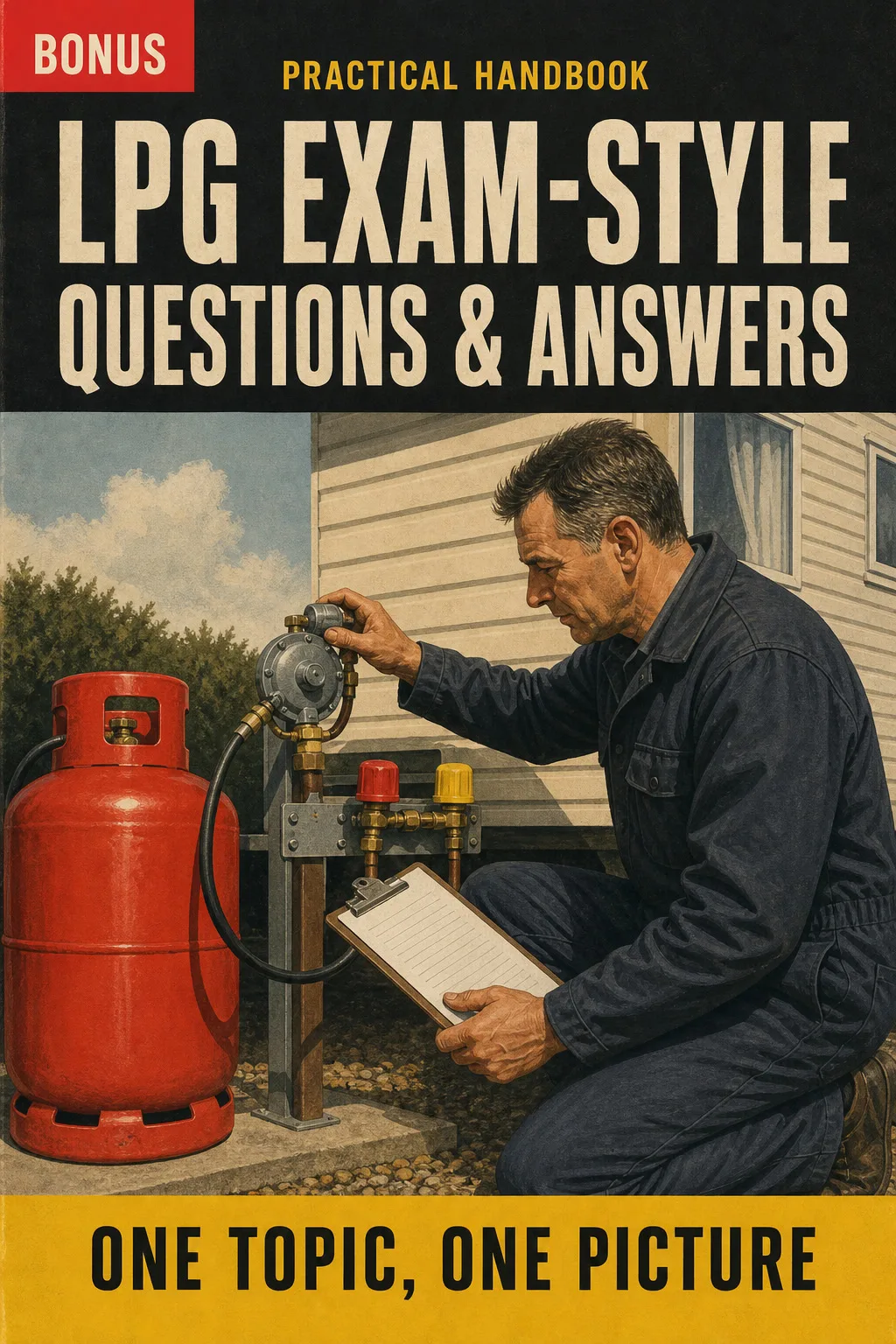
LPG Exam-Style Questions & Answers

BONUS 1: «LPG Exam-Style Questions & Answers»

Value on its own: US$ 17.90

Practise with exam-style questions and worked answers, so you can see where you stand before the assessment.

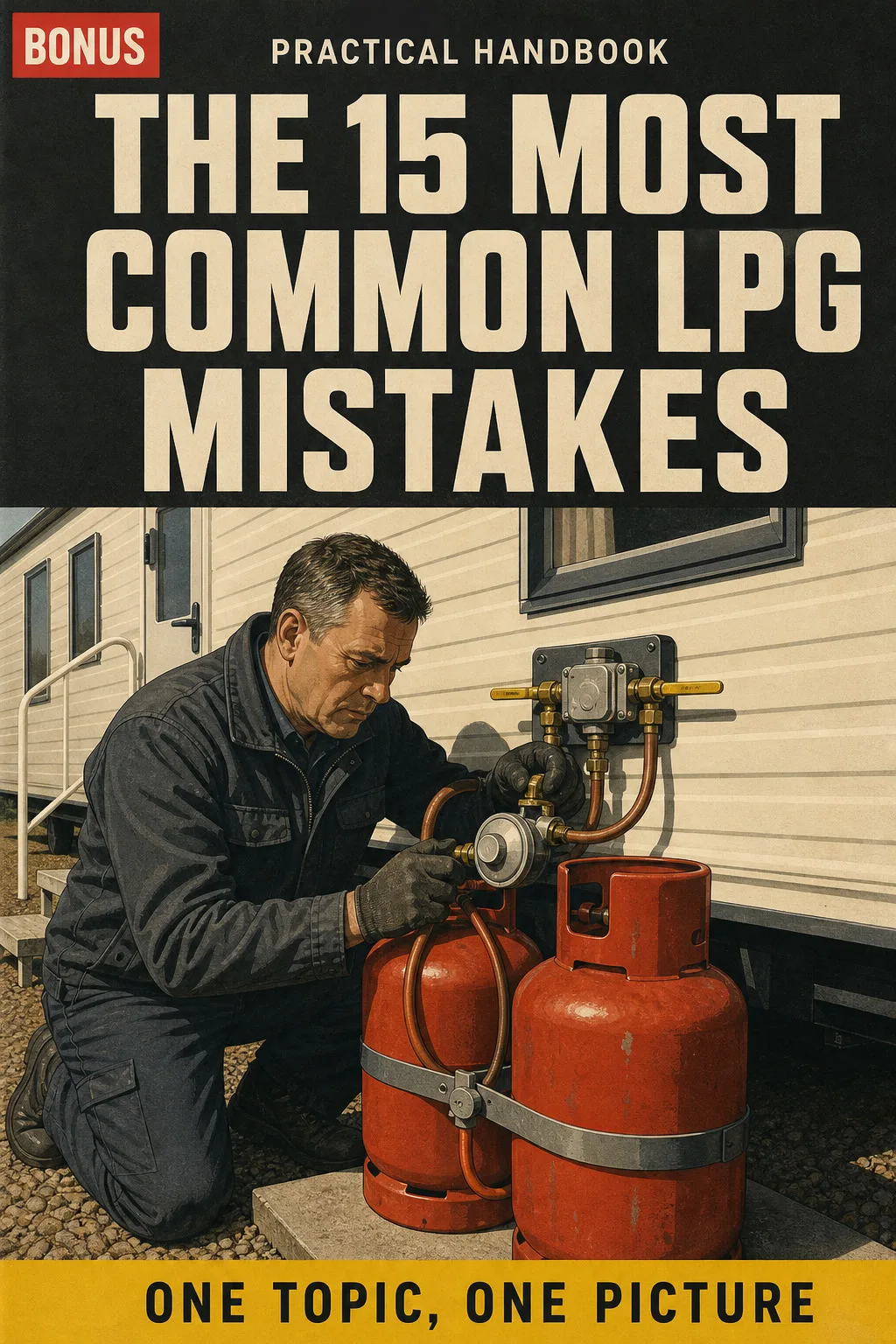
The 15 Most Common LPG Mistakes

BONUS 2: «The 15 Most Common LPG Mistakes»

Value on its own: US$ 14.90

Each frequent mistake drawn before and after, so you can spot it on site and avoid it in the assessment.

LPG Gas Safety Illustrated with 2 Free Books

  • LPG Gas Safety Illustrated: 66 illustrated pagesUS$ 63
  • BONUS 1: LPG Exam-Style Questions & AnswersUS$ 17.90
  • BONUS 2: The 15 Most Common LPG MistakesUS$ 14.90
  • High-resolution PDF to printIncluded
Total value US$ 95.80
YOUR PRICE:
US$ 27
You save US$ 68.80
YES, I WANT LPG GAS SAFETY ILLUSTRATED FOR US$ 27

📄 This is a digital PDF book sent to your email: nothing is printed or shipped.

Secure purchaseEncrypted payment30-day guarantee

PDF by email: We email you LPG Gas Safety Illustrated as a PDF, together with the two free books. It's a single payment: no installments, no extra charges.

Who This Book Is For

You're adding LPG to your work

You're adding LPG to your work

You see what changes from natural gas, topic by topic: pressures, cylinder siting, testing and ventilation, all drawn.

Your ACS LPG assessment is close

Your ACS LPG assessment is close

Every topic is in the same order, with the values in a box, so you revise the night before without searching through the standards.

You already work on LPG

You already work on LPG

Print it and keep it in the van: the pressure ladder, ID or AR and the caravan checks to hand on site.

Everything You Get Today

US$ 95.80US$ 27
YES, I WANT LPG GAS SAFETY ILLUSTRATED FOR US$ 27

📄 This is a digital PDF book sent to your email: nothing is printed or shipped.

30DAYS
GUARANTEE

30-Day Guarantee

Try LPG Gas Safety Illustrated for 30 days, bonus books included.

We refund everything if the file won't open, if the book isn't what you see here, if you were charged twice or if the email doesn't arrive. Just email us.

You pay once. No subscriptions.

Frequently Asked Questions

Is it for me if I've worked on natural gas for years and I'm adding LPG?

Yes. It's written for Gas Safe registered engineers who already know natural gas: it shows what changes with LPG, page by page. It covers the core CCLP1 topics plus permanent dwellings and park homes (CCLP1 RPH) and leisure vehicles (CCLP1 LAV), so it works for a first LPG assessment or your 5-year reassessment. It isn't a DIY guide and it isn't a qualification.

Where does the content come from?

From the published UK guidance: GSIUR 1998 and HSE L56, BS 5482-1, BS EN 1949, IGEM/UP/1B, BS 5440, IGEM/G/11 and the UKLPG Codes of Practice. Each value is checked against the current edition.

Is it official material?

No. It's an independent illustrated study book, not issued or endorsed by any certification body, training centre or regulator.

Does it replace the training course?

No. Your training centre's manual is the full text, and you still need the ACS course, the assessment and the manufacturers' instructions. This book draws the same rules one topic per page, with the values in a box, so you can revise in an evening and keep them to hand on site.

Are the practice questions the ones in the assessment?

No. The exam-style questions are written for this book. They help you see where you stand; they aren't official questions.

When and how does it arrive?

The book and the 2 gifts arrive as PDFs by email, at the address you enter when you pay.

Do I have to pay every month?

No. It's a one-off payment, with no subscription.

Can I have it on paper?

Yes. The PDF prints well at home or at a print shop, so you can keep it in the van.

How does the refund work?

You have 30 days. We refund everything if the file won't open, if the book isn't what you see on this page, if you were charged twice or if the email doesn't arrive: just email us.

Before You Close This Page

No more rereading the standards with nothing sticking.

The pressure ladder: you see it drawn and that's it.

You go into the assessment knowing where everything is.

Drawings make studying faster.

The book is right below.

One-time payment: US$ 27 · Guarantee: 30 days · PDF by email

YES, I WANT LPG GAS SAFETY ILLUSTRATED FOR US$ 27

📄 This is a digital PDF book sent to your email: nothing is printed or shipped.